
Start With Denver's Right Record
Let the first clue pick the first custodian. That rule shapes any Denver residents directory search. An address belongs to the City and County of Denver property viewer, where a parcel result supplies a schedule number, legal description, owner name, mailing address, and map position. A known person fits the Colorado voter lookup, a court docket, or a state license record. Family-history questions often start elsewhere entirely, with a city directory, an obituary, or a newspaper. These records answer different questions. A name match, an owner match, and an occupant entry are three separate facts, never one.
Official trails are strongest when two dated sources agree. Weaker ground includes common names, entity owners, mailing addresses, and directory gaps. A blank result has many possible causes. The voter record may be protected. The court file may be sealed. An OCR miss, a missing deed image, or a year the library does not hold can all hide a match. The custodian can explain the gap and certify what the public index cannot.
- Start with the clue in hand: name, address, parcel, court event, or historical year.
- Use Spatialest for a known address or parcel number, and save the legal description separately from the mailing address.
- Use the Colorado voter lookup only with its required name, ZIP, and birthday fields, remembering that protected records may not appear.
- Move from a parcel or party name to the Denver PublicSearch deed index when ownership history matters.
- Use Denver Public Library directories, newspapers, and maps for an older household, then request a missing record from its custodian.
Denver's Resident Records Offices
Denver's consolidated city-county government keeps several key record functions under one roof. Yet the records still live in distinct systems. The Clerk and Recorder routes recorded documents, marriage records, elections, and PublicSearch. The Assessor ties each parcel to an owner. It also adds tax fields, a legal description, and a map. Elections controls the voter lookup and its protected-record rules. Colorado courts, CDPHE, Denver Public Library, and State Archives fill the gaps. A current local parcel search cannot cover those on its own.
Denver Clerk and Recorder
200 W. 14th Ave.
Denver, CO 80204
311 or 720-913-1311
Denver Assessor
City and County of Denver
Public property information
720-913-4162
Colorado Elections
1700 Broadway, Suite 550
Denver, CO 80290
303-894-2200
The Clerk and Recorder's published contact route lists weekday counter hours of 8:00 a.m. to 5:00 p.m. Call 311 inside Denver. Call 720-913-1311 outside the city. Online certified copies run $1 per document plus $0.25 per page. Check current fee notices before payment. Sometimes an indexed reception number has no image. Then the Recording Division directs requests to recording@denvergov.org.
The office map is practical, not just administrative. A property question can move from Assessor to Recorder. A name question may travel from Elections to court or state records. A historical address usually lands at Denver Public Library Special Collections and Archives. Staff there can identify the right reel, book, or digital object for your search.
The Denver Clerk and Recorder routing page shows how the city joins recorded documents, marriages, elections, courts, and library resources. It never merges them into one searchable resident list.
The Denver Property Record Search is the better first screen when an address or parcel is known. Treat its result as evidence about a parcel and its owner fields. It is not a statement about every person in the household.
Denver Resident Parcel Search
Spatialest is unusually candid about its limits. The Denver interface accepts an address or a Parcel Number, also called a schedule number or PARID in the result. There is no direct owner-name search box. There is no ZIP filter either. A person-first search therefore needs a second step: find an address, open the parcel, then read the owner and mailing fields. The map supports full and shape searches, so a visual parcel check helps when a street string is old or incomplete.
| Control | What it does | Research note |
|---|---|---|
| Address | Text or autocomplete query | Use the situs street address and house number. |
| Parcel Number | Text or autocomplete query | Use the schedule/PARID when a legal parcel key is known. |
| Map and shape | Visual parcel selection | Useful for adjacent parcels and a street segment. |
| Sort | Schedule number, address, or owner name | Sorting is not the same as an owner-name search. |
| Export | Excel result export | The inspected interface caps the result view at 300 and export at 500. |
A parcel record can show a full or situs address, owner names, OwnerFullAddress and ZIPBASE, and the legal description. It also lists class, land-use code, zoning, tax district, land and building square feet, values by tax year, tax notices, sale date, and sale price. The label matters. Situs means where the parcel sits. OwnerFullAddress is where notices go. A mailing ZIP outside Denver does not prove the owner lives elsewhere. An owner name does not prove occupancy either.
For a wider view, the map layers include OpenStreetMap and Nearmap Aerial basemaps, plus parcel boundaries, county boundary, and FEMA floodplains. Enterprise zones, neighborhoods, zoning, and street names round out the map. The Denver Parcels open-data layer is a separate dataset. It is useful for structured parcel analysis, but it is no substitute for the live assessor record.
Denver residents directory searches grow more accurate when the parcel key stays attached to every note. Keep the address, PARID, legal description, owner label, mailing ZIP, and source date as separate fields.
The Denver assessor search displays the address-and-parcel route to follow. Try it before consulting a deed or historical source.
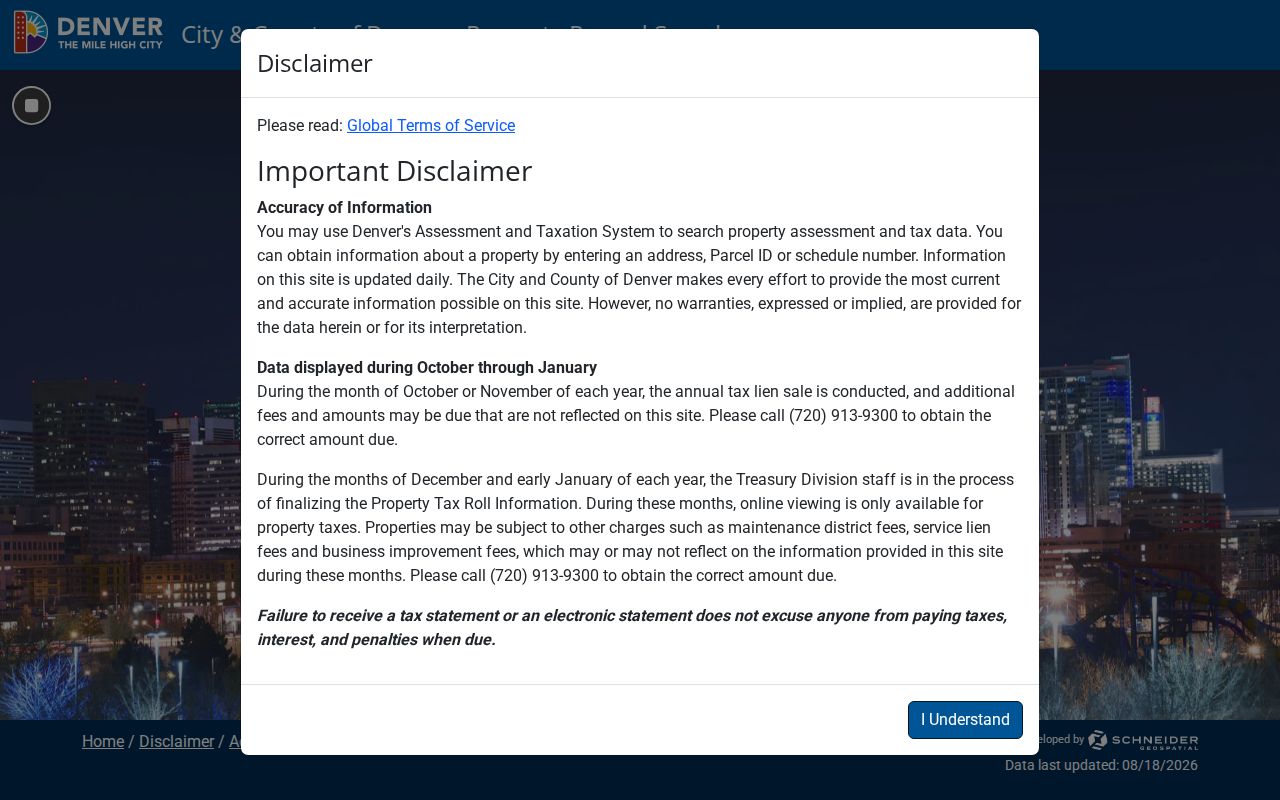
The parcel screen is a starting key. It narrows the record trail without turning an assessment field into a claim about who lives in the household right now.
Denver Address Records Have Four Fields
One address string cannot do four jobs at once. That mistake sinks more Denver address research than any missing record. Before comparing a residents directory entry against a deed or voter roll, log the house number, the street name, the parcel, and the notice address as separate fields. The split matters most when a house number was reassigned, a street took a new name, or a parcel owner gets mail somewhere other than the property.
- Situs address
- The physical location of the parcel in the assessor record.
- Mailing address
- The destination for an owner's notices, which may not be the parcel.
- Legal description
- The lot, block, subdivision, or metes-and-bounds language that can survive a street-string change.
- Postal delivery address
- The USPS routing form of the address, including the ZIP and recognized locality.
Addressing authority sits with the City Engineer under DRMC §49-56 and DOTI's 2010 policy. Requests route through Addressing@denvergov.org, 720-865-3002, e-permits, or a $60 charge per address or unit. A street rename ripples through legal documents, maps, and emergency references alike. So the older street name belongs in your search log.
USPS naming adds a second layer. A Denver result in the USPS City and State lookup means postal recognition. It is not a municipal-boundary ruling. Locality, ZIP code directory labels, parcel data, and neighborhood names can disagree. Cite whichever layer supplied each label. That is exactly why a Denver residents directory needs source-specific fields. A single address column would not capture the differences.
Current Denver Resident Directory Sources
There is no master roster of Denver residents. Current resident directory work is really a comparison of record types. The assessor's property roll is parcel-first. The voter lookup is person-first and demands four exact fields. PublicSearch is instrument-first, tying parties to recorded documents. A court docket is event-first. State license, business, custody, and unclaimed-property systems can add clues. Each carries a narrow purpose and a different public boundary.
| Source | Who It Lists | Keeper | Access |
|---|---|---|---|
| Spatialest parcel | Owners tied to a parcel | Denver Assessor | Current online search |
| Colorado voter lookup | Registration match/status | Secretary of State | Name, ZIP, birthday |
| PublicSearch index | Parties to deeds and liens | Clerk and Recorder | Guest index; image limits |
| Court docket | Case parties and events | Colorado Judicial / Denver County Court | Docket or case-number route |
| Business or license filing | Entity or credential clue | Colorado Secretary of State / Department of Regulatory Agencies | Affiliation, not residence proof |
| Unclaimed property | Possible owner-name match | Colorado Treasury | Claim and identity proof |
Official sources and commercial compilations are not interchangeable. An official record has a named custodian, a defined record type, and a correction route. A commercial compilation may blend public filings with stale addresses or marketing data. Name collisions there are far harder to resolve. Treat its past-residents entries as leads, not settled facts.
| Route | Strength | Limit |
|---|---|---|
| Official custodian | Source, date, field, and correction path are identifiable. | Each portal covers only its own record set. |
| Commercial compilation | May gather several public clues in one result. | Source dates, errors, and correction routes can be unclear. |
Match the tool to the question. Use the assessor when an address is known. Elections fits when a lawful identity check has every required field. The recorder covers a transfer or lien. The Denver resident lookup page walks the one-person sequence in more detail. A business filing can reveal a registered agent or principal address. A DORA result can show license status and profession. Neither proves anyone actually lives at the filed address.
State custody systems have their own gates. The Colorado DOC locator wants a DOC number, name, gender, and CAPTCHA. The CBI registry covers only defined public categories. It stops short of a full criminal-history index. Great Colorado Payback is a free official claim route. Yet a match still demands proof of ownership. Keep a dated source log beside every name. These limits change what a result means.
The Colorado Secretary of State business search shows how an organization record can support a resident lookup. It can never replace one.
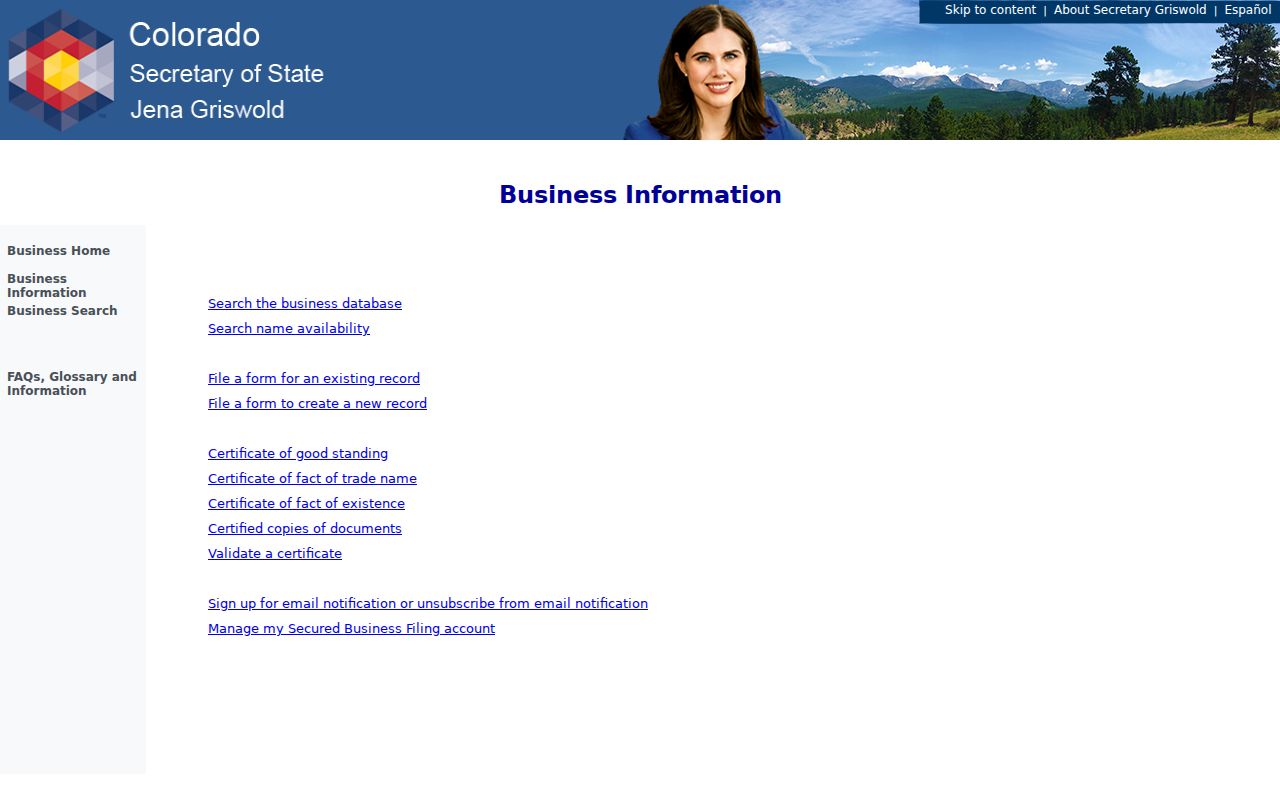
Treat an entity address as a business contact field until a second source gives it residential context.
Denver Voter Lookup Uses Four Fields
The Colorado Secretary of State lookup is narrow on purpose. It asks for first name, last name, ZIP, and birthday. A recent mover can retry with a prior ZIP. A no-match, though, has several explanations. The record may be confidential. The voter may be under 18, or the name may be entered differently. List maintenance may also have shifted the status. Treat the tool as a registration-match workflow, not a downloadable street roster.
| Field | Why it matters |
|---|---|
| First name | Matches the registration name. |
| Last name | Matches the registered surname. |
| ZIP | Narrows the match; a recent mover may need a former ZIP. |
| Birthday | Separates people with similar names. |
Colorado voter-data materials split public values from protected ones. Public categories include name, residential and mailing address. They also cover year of birth, party affiliation, vote history, and active or inactive status. Protected values include the full birth date, identification data, and confidential records. C.R.S. §1-2-227 makes registration records public subject to its exceptions. Election confidentiality rules shield qualifying addresses. A blank lookup is an unresolved result, not proof that no registration exists.
The Colorado voter lookup displays the name, ZIP, and birthday fields. Those are required for a lawful, person-specific check.
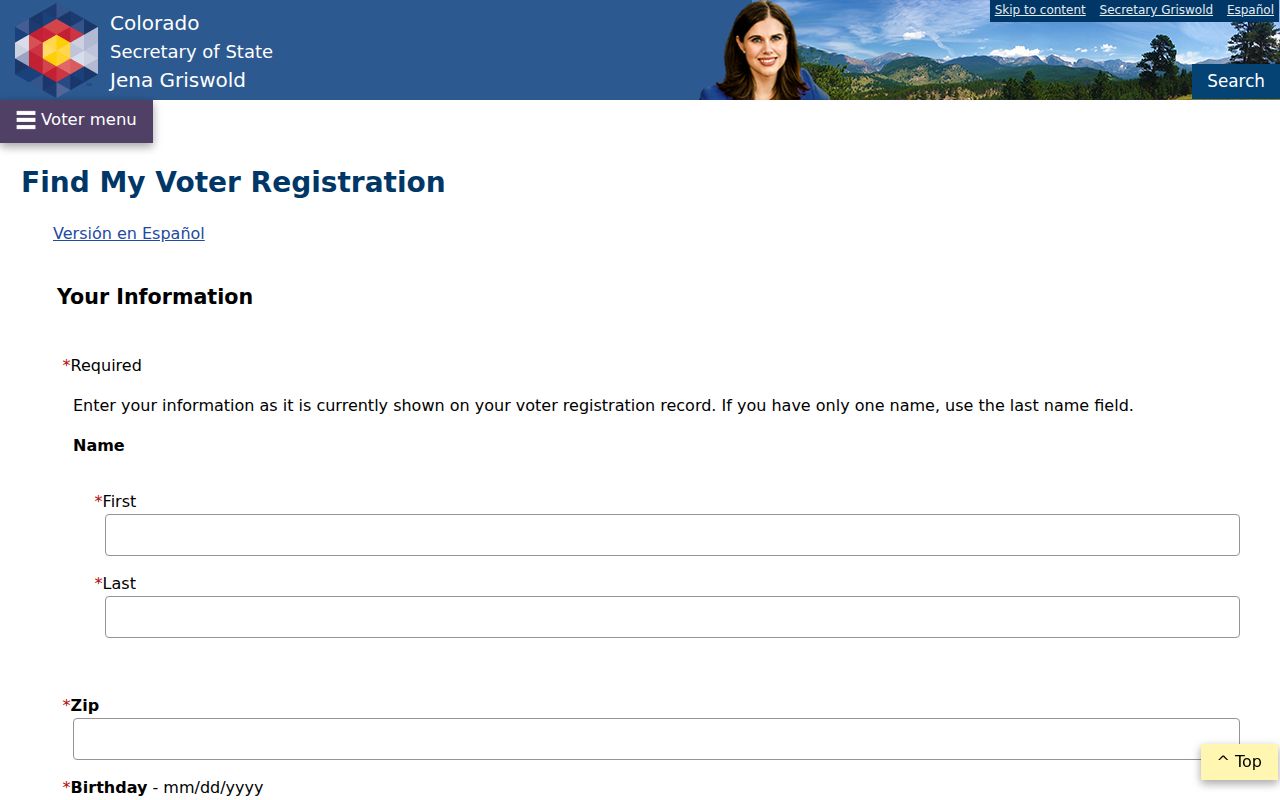
Keep the returned status and the query date. Never stretch that narrow confirmation into a bulk list of Denver residents.
Denver Resident Court Records Need Context
A court name search yields a dated clue, nothing more. A docket is not the whole case file. Colorado Judicial's statewide docket filters by judicial district, county, courthouse, court type, division, date, case number, party, or attorney. It also requires at least one filter beyond a date. Denver County Court's public portal takes a different route. It emphasizes case number or arrest booking number, along with limited future court-date forms. Official case information generally needs a valid case number.
| Route | Search basis | What it can show | Next step |
|---|---|---|---|
| Colorado Judicial docket | Location, date, case, party, attorney | Calendar and docket events | Request the file from the court |
| Denver County Court | Case number or AB# | Limited case/date information | Use the clerk for official records |
| District of Colorado PACER | Federal party or attorney | Federal case access | Account and current fee rules apply |
A public docket may list case number, court and division, party names, attorney information, hearing dates, and a disposition. The portal exposes only what it exposes. Everything behind the docket is another matter. Complete files, exhibits, transcripts, certified copies, and archived cases require the clerk or a formal records request. Colorado Judicial's request form asks for requester, case, document, location, and delivery details. Processing generally takes 3 to 5 business days. Sealed, juvenile, adoption, protected, or expunged material may be missing or redacted.
The statewide docket page shows the filter model. The Denver County Court portal shows the case-number and booking bridge.
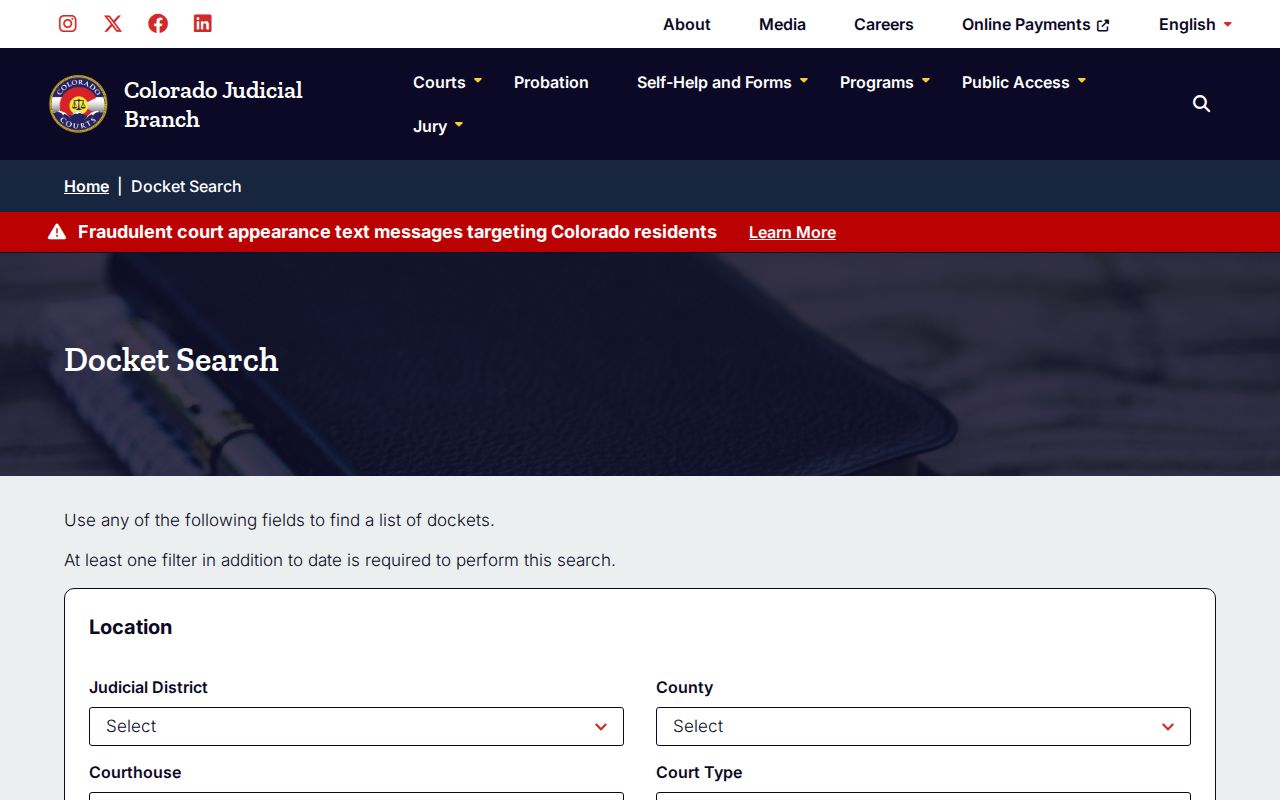
A court result is one dated record in a verification packet. It is never a stand-alone identity conclusion. The Denver County Court quick-search page shows the case-number and arrest-booking route for a narrower check.
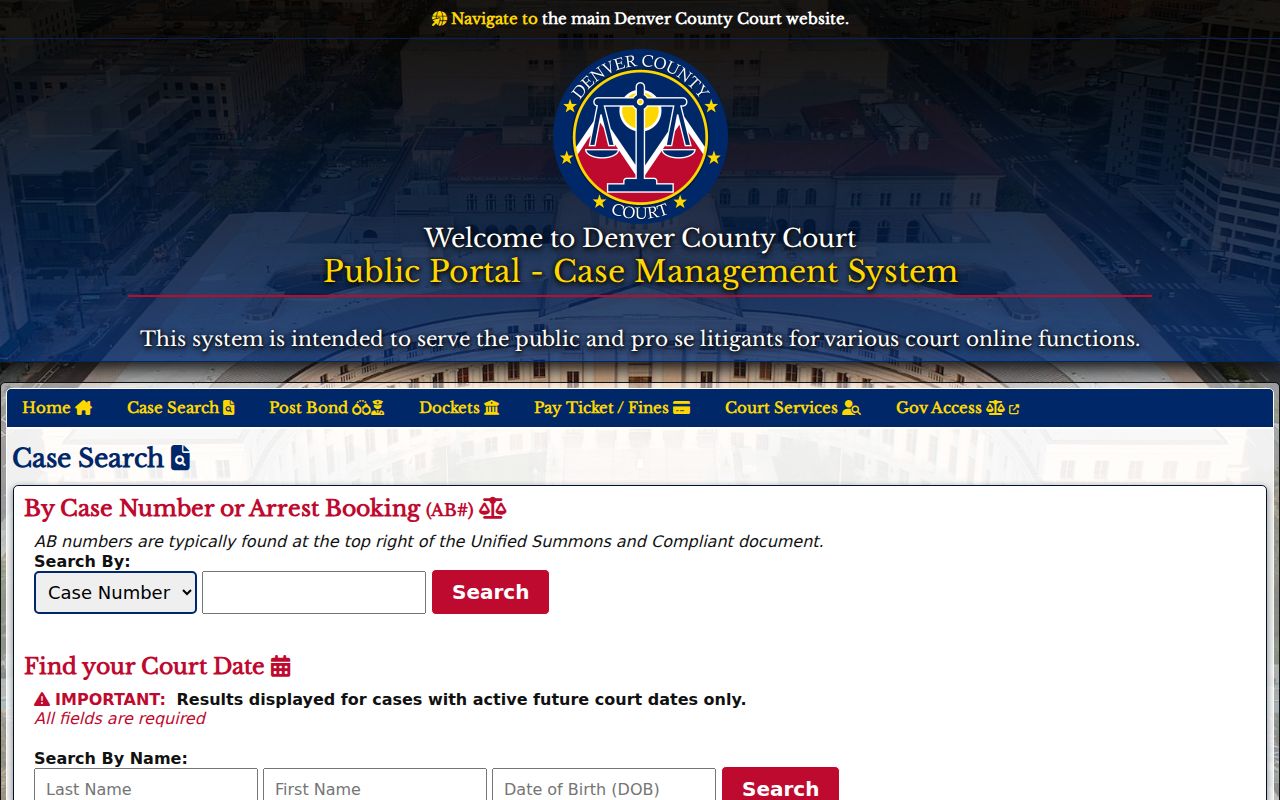
Denver County Court keeps only a narrow window for searching case records by name. Even with the right name in hand, a clerk request is often the practical next step.
Denver's 160-Year Record Trail
Denver's recording history stretches across 160 years, and most of it lives in one database. A 2021 records-management audit describes a CountyFusion system holding more than 11 million documents. Those documents run from 1859 onward. Fresh images go up overnight. That means next-day availability for newly recorded material. Paper that was never digitized, though, still sits in city and offsite storage. So "1859 to present" describes the database's span. It is not a promise that every deed image is online.
The Clerk and Recorder's guest search starts simple: a party name, a department, and a recorded-date range. PublicSearch adds muscle with index-only and full-text OCR modes. It also offers advanced fields for party, grantor, grantee, reception, document type, book and page, and document text. When the index points to a missing image, the reception number is the stable handoff to cite. DPL's guide points to an older grantor and grantee route covering 1859 to 1986. The library holds selected digitized books from 1859 through 1884.
The Denver Clerk and Recorder's record-finding page displays the official routing among the county's local record systems before a request goes out.
Before mailing anything, check the current routing page for the office's own instructions. The PublicSearch advanced-index screen lays out the party and instrument fields that turn a single parcel clue into a deed trail.
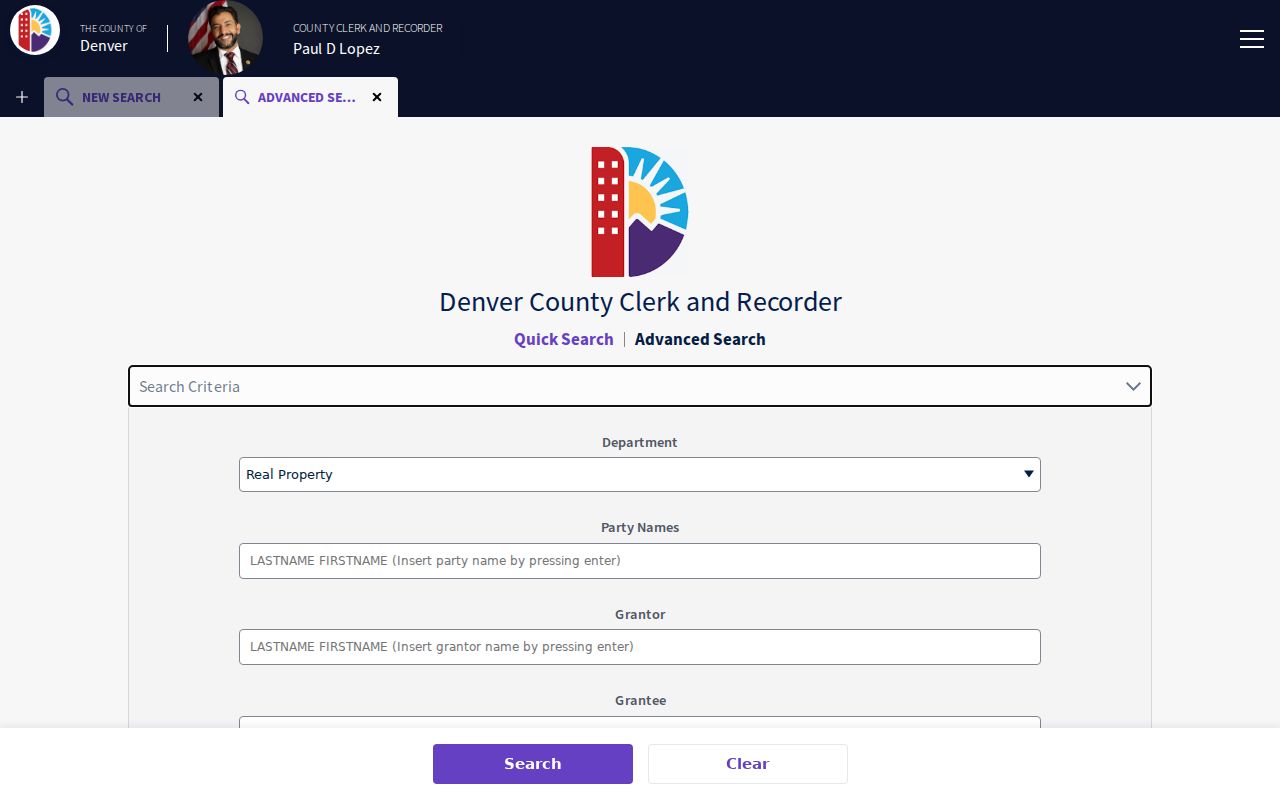
Index access and image access are separate steps, so keep the reception number, search terms, and source date together.
Historical Denver Resident Directories
Denver Public Library's historical shelf runs far past one alphabetical book. SCA holds city directories on microfilm from 1866 to 1981. Digitized city directories cover 1873 to 1923. Ancestry Library Edition adds 1866 plus 1871 through 1979. Householder, street, and criss-cross directories in the holdings span 1924 to 2018. The 1924 to 1937 range is digitized. Polk examples include 1899, 1913, and 1960 to 1996. The Denver city directory collections page explains how to read those sets. It helps you avoid mistaking a person-first entry for an address-first one.
A single directory entry can surface a name. It may also show an address, an occupation, a household notation, a move, or a printed cross-reference. The front City Record pages carry a year's civic texture too: officials, wards, schools, churches, public buildings, street changes, and advertisements. Treat the record as historical evidence, not proof of current occupancy. Pair the year with a deed, permit, newspaper, obituary, or a later directory.
The collection's long numeric span helps here. It reaches from nineteenth-century city runs through late twentieth-century householder material. That reach bridges census years. It gives an old address several chances to appear, even under a changed spelling or street number.
Denver Vital Records Are Confidential
Colorado vital records do not work as a public online name index. C.R.S. §25-2-117 treats vital-statistics records as confidential. A certified copy goes only to an applicant with a direct and tangible interest. Expect to show identification and proof of relationship or legal interest. Each record type has its own custodian: birth, death, marriage, civil union, adoption, and dissolution all travel different routes. A court case file is not the same product as a state verification.
For Denver research, CDPHE and local offices handle birth and death routes. The Clerk and Recorder issues local marriage copies. The district court holds divorce and separation files. The state ordering route states that online processing normally takes 30 business days from receipt. A 2026 fee notice changed product costs. Check the live application for the exact current fee. For family history, DPL newspapers, obituaries, directories, cemetery material, and State Archives finding aids are often the practical first pass. The Colorado vital-records office page shows the official route an eligible requester follows.
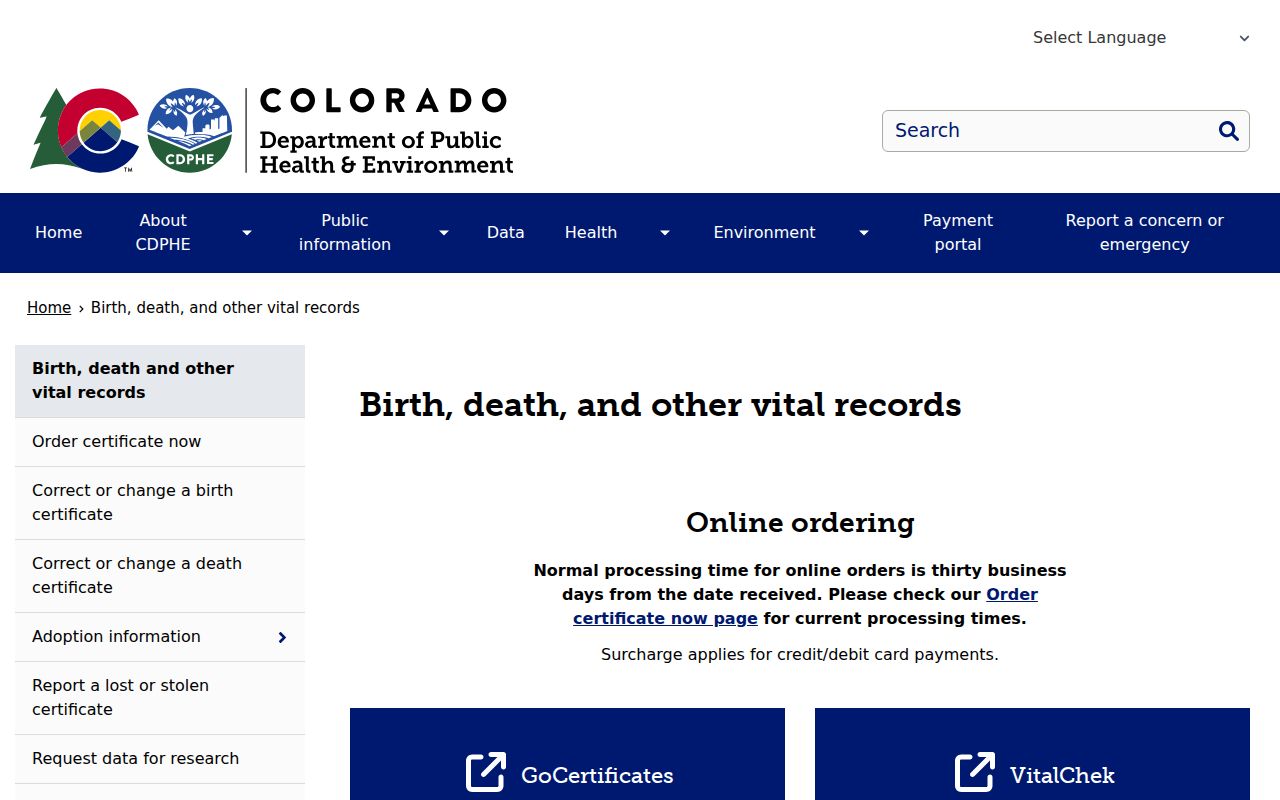
Eligibility governs the ordering path, not a general public name search. The state's certificate-order page lays out the separate application path for a record that can lawfully be released.
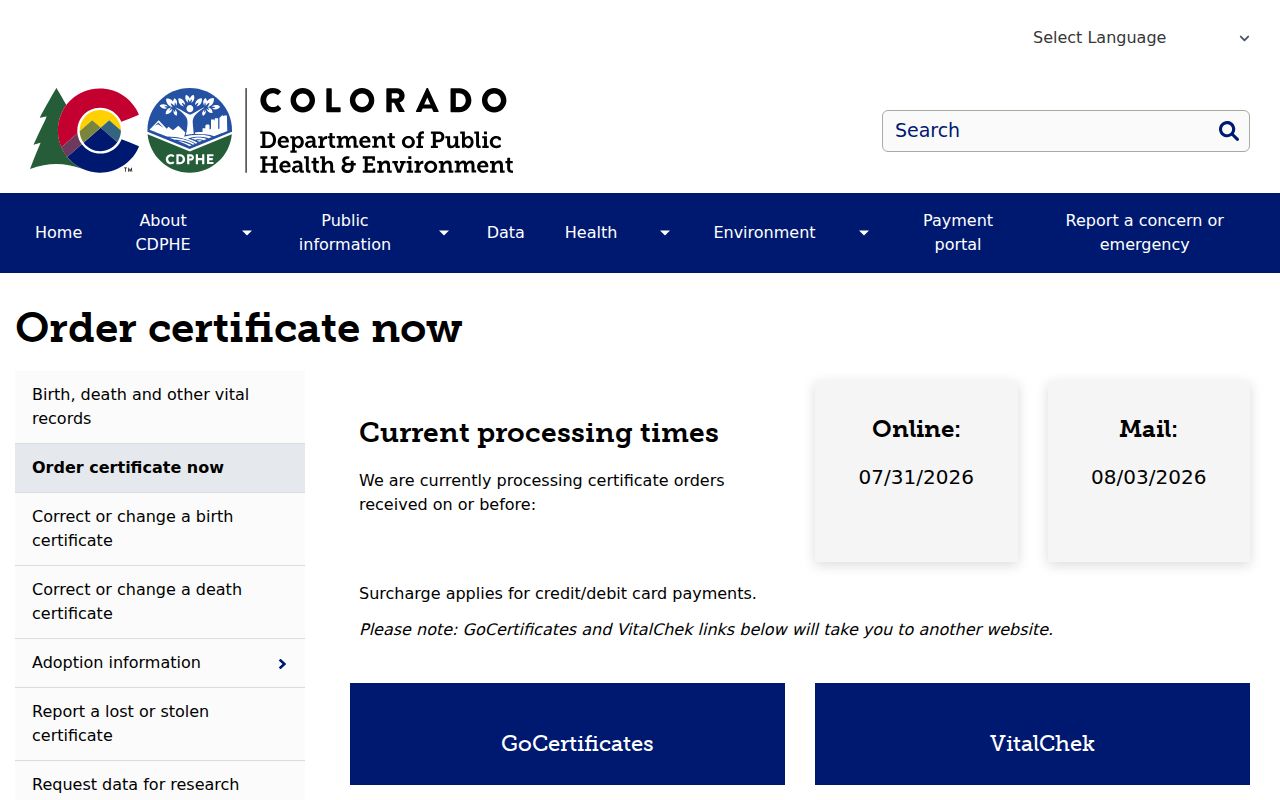
A restricted certificate is not the end of the trail. A dated obituary or directory citation can still supply the family clue without standing in for the certificate itself.
Protected Denver Records and Addresses
Public records have boundaries, and Denver researchers should know where they sit. Colorado's Address Confidentiality Program gives qualifying survivors a legal substitute address with mail forwarding. Election rules can shield a participant's actual address, county, precinct, and split. The state's 2025 first-responder confidentiality changes add another current protection route. A voter lookup that returns no match may simply be working as designed.
The same caution carries across other sources. Vital certificates require direct and tangible interest. Courts can withhold sealed, juvenile, adoption, or expunged material. Motor-vehicle information falls under federal privacy rules. Recorded documents do contain names and addresses. Unnecessary personal details should not be copied into a research note or a shared page.
Lawful personal use. Use Denver record sources for family history, civic research, property history, and other lawful purposes. Do not use a name, address, or record result to stalk, harass, threaten, or harm anyone.
Private data held by a covered controller has its own rulebook. The Colorado Privacy Act, C.R.S. §§6-1-1301 through 6-1-1313, grants access, correction, deletion, and opt-out rights in the situations the law covers. Global Privacy Control is the universal opt-out mechanism the Colorado Attorney General recognizes. None of those rights erases a lawful county deed, court file, or historical library volume.
Denver Records Letters Need Checking
Denver record research has a consumer-safety side too. Some letters pitch a deed copy or a monitoring service at an inflated price. So treat any mailing that arrives uninvited with suspicion. The official Clerk and Recorder points researchers to its own index and its copy instructions. It also offers the FraudSleuth alert. Colorado's Great Colorado Payback makes one thing plain: filing a claim costs nothing. And if a letter demands a court payment, call the published courthouse number. Never use the one printed on the paper.
| Message or offer | Verify with | Safe first move |
|---|---|---|
| Deed or property notice | Denver Clerk and Recorder | Use the reception number and official records route. |
| Unclaimed-property fee request | Colorado Treasury | Start at Great Colorado Payback; a basic claim is free. |
| Court payment demand | Denver County Court or the right clerk | Call a number published by the court. |
| Identity or phishing message | Colorado Attorney General guidance | Type the official URL and keep the original message. |
Keep good notes as you go. A solid research log lists the source URL, the date, the record type, and a citation. Leave out exact birth dates, ID numbers, personal phone numbers, and protected addresses. The custodian only needs them for a formal request. Less is more. A trustworthy Denver residents directory workflow shows where the uncertainty sits. It also sends the final question back to the office that holds the record. The Colorado DOC search makes the same point in miniature. Even an official lookup has a defined scope. It never amounts to a complete history.
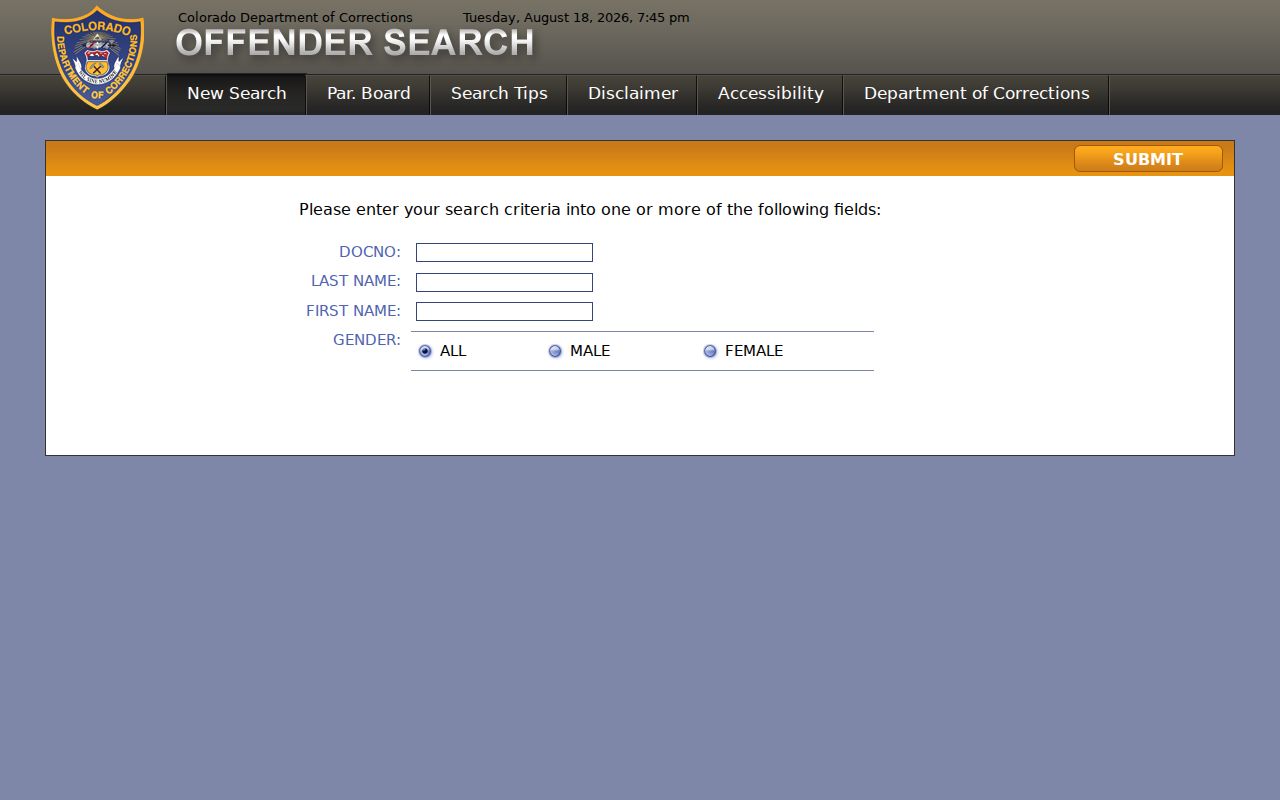
A scoped result beats a broad claim, so save exactly what the portal says.